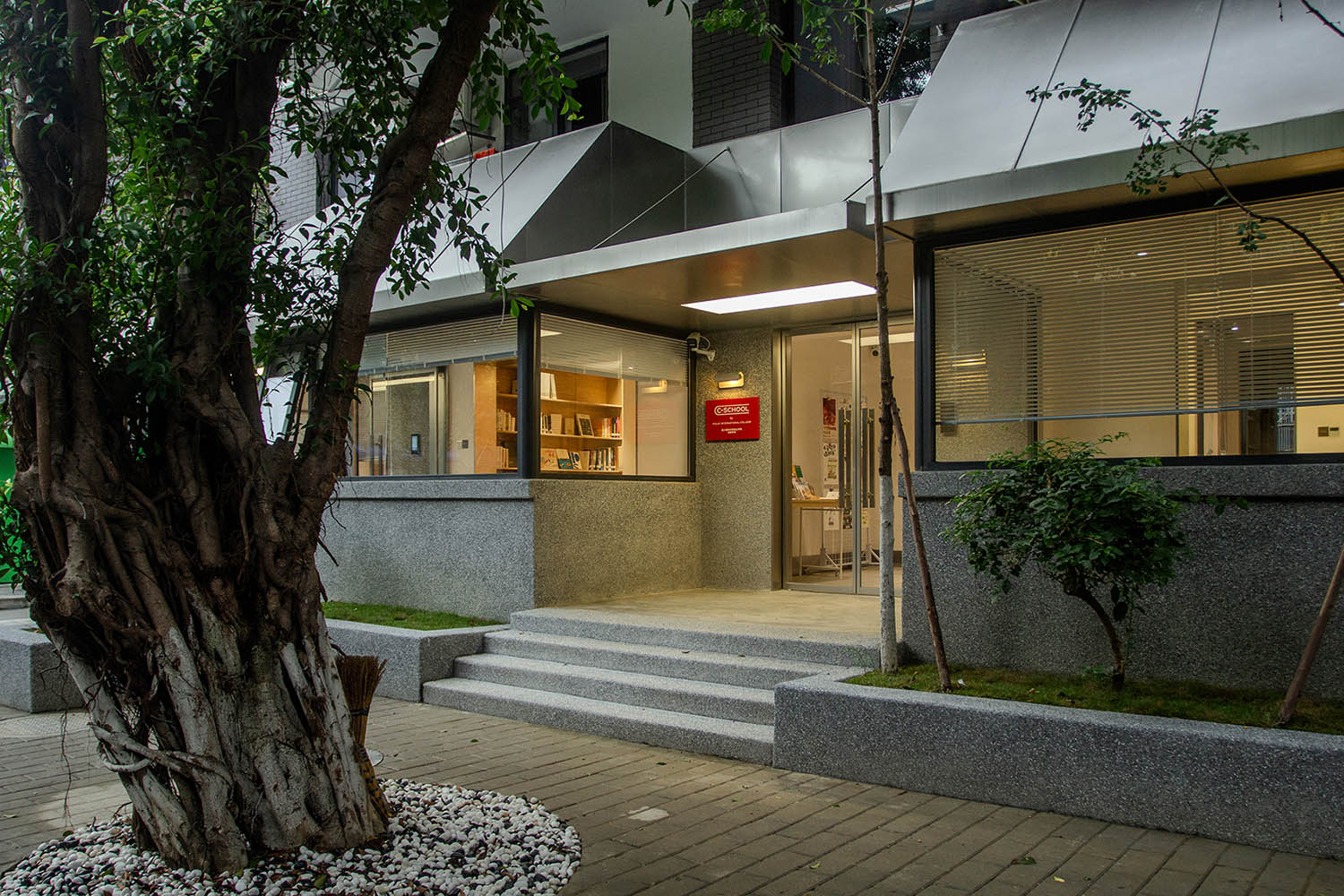
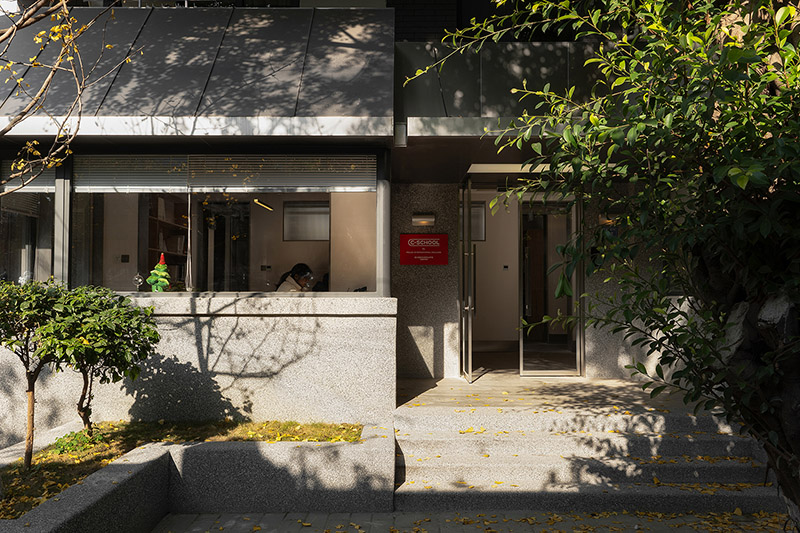
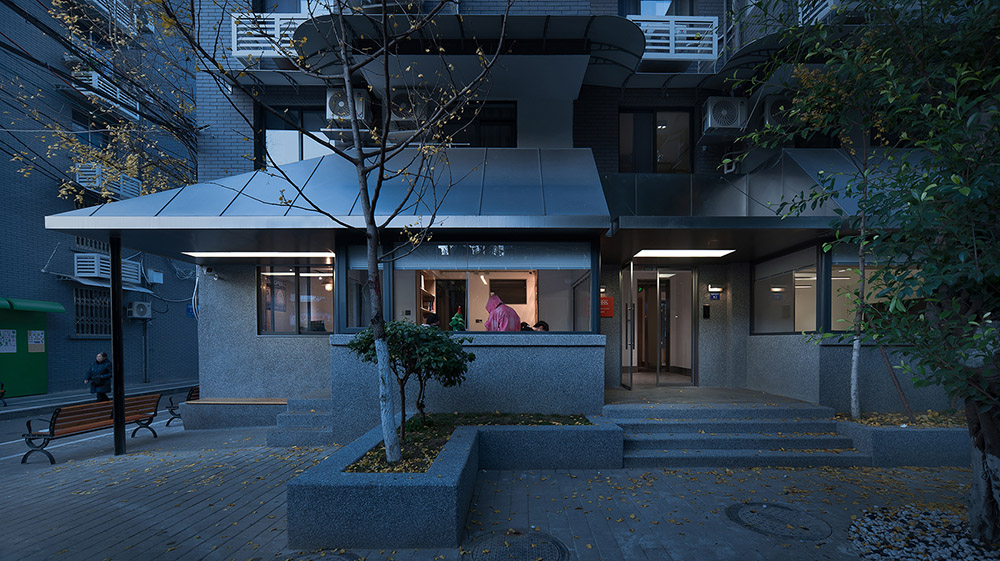
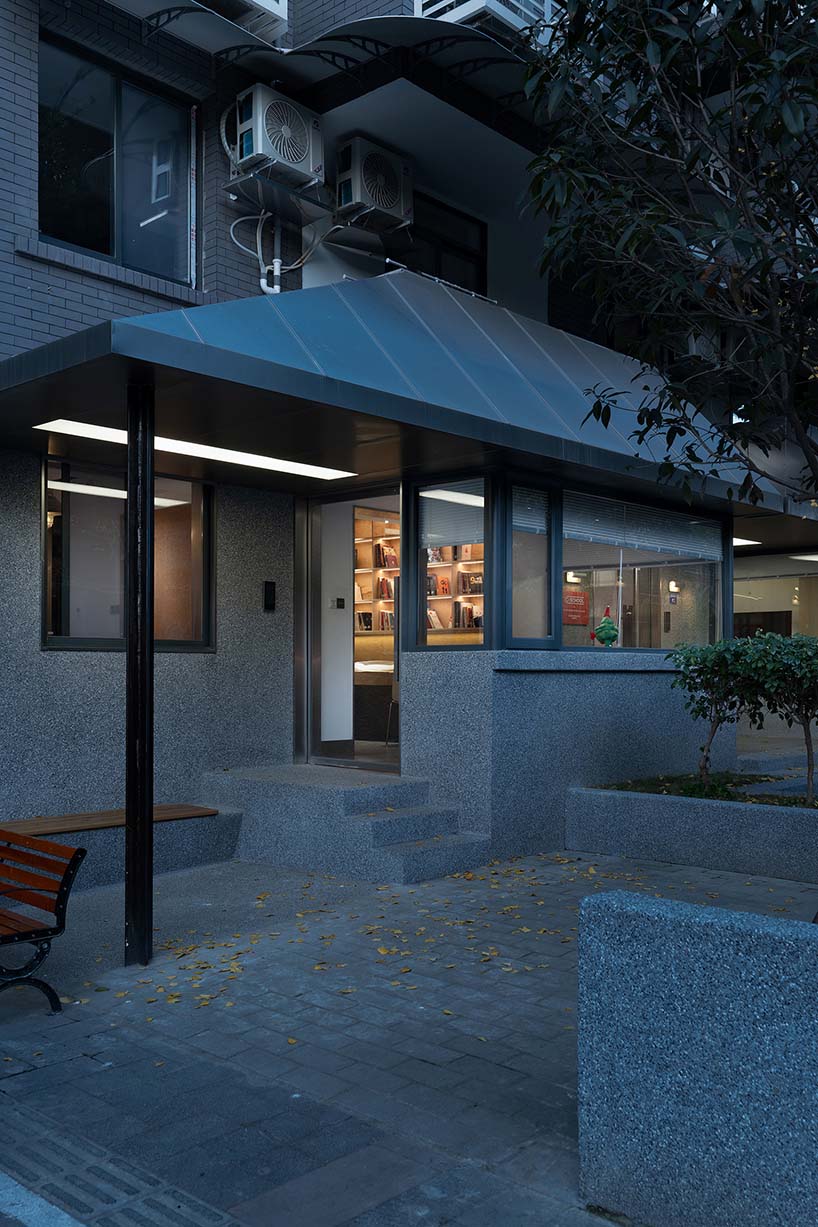
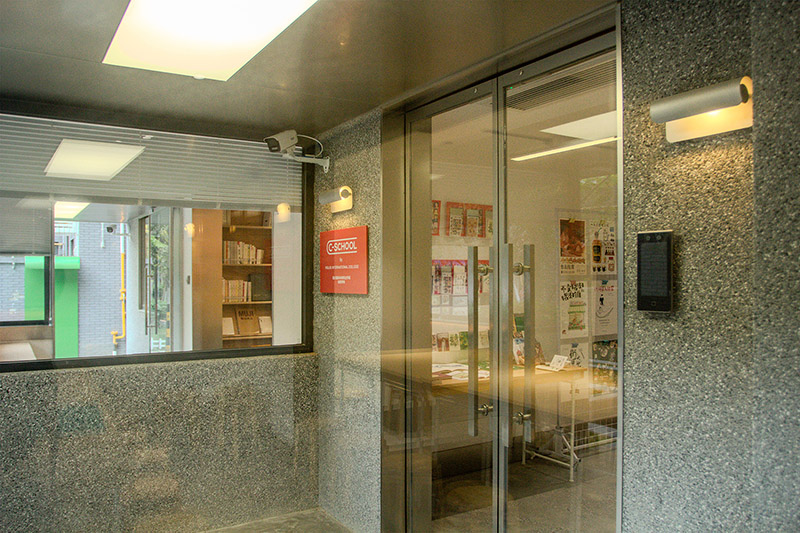
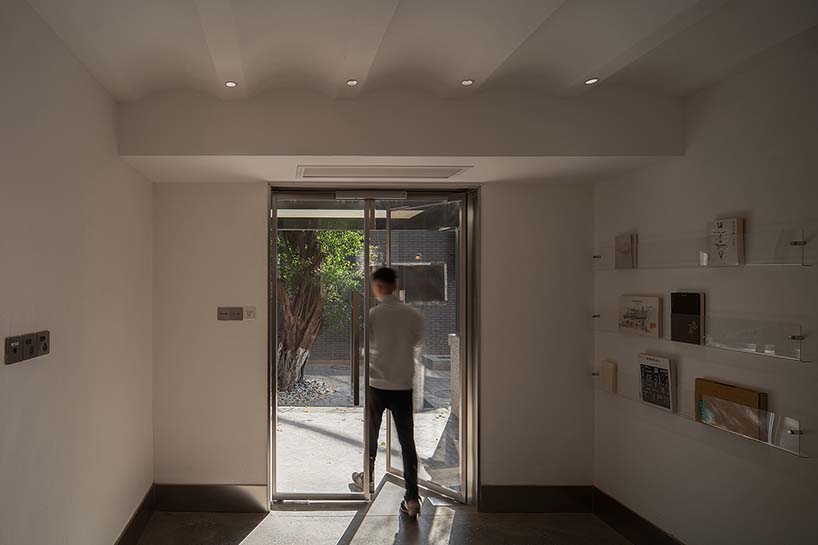
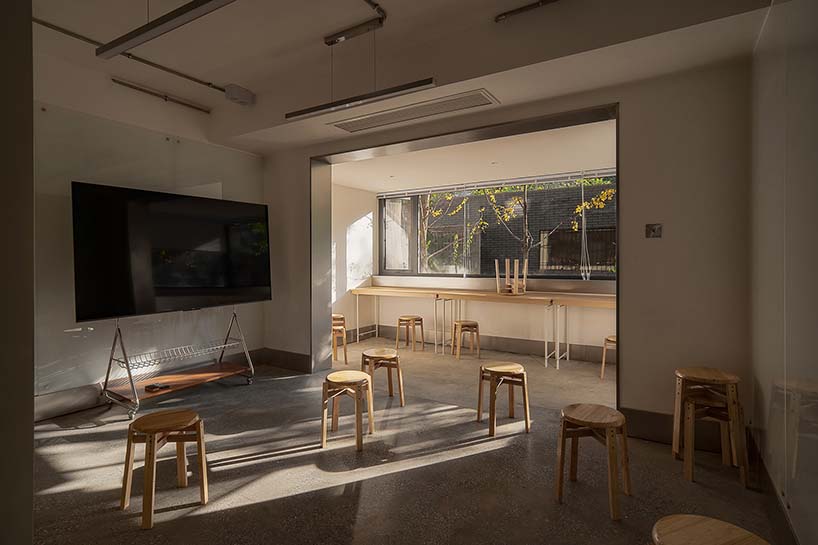
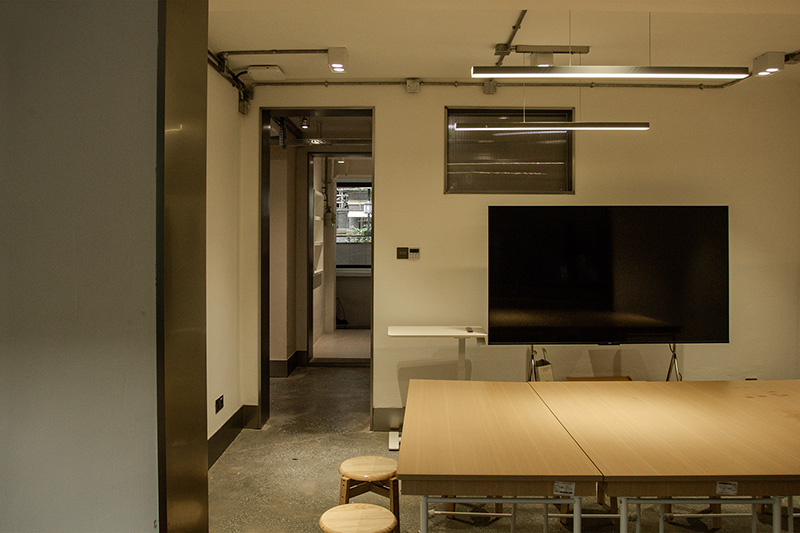
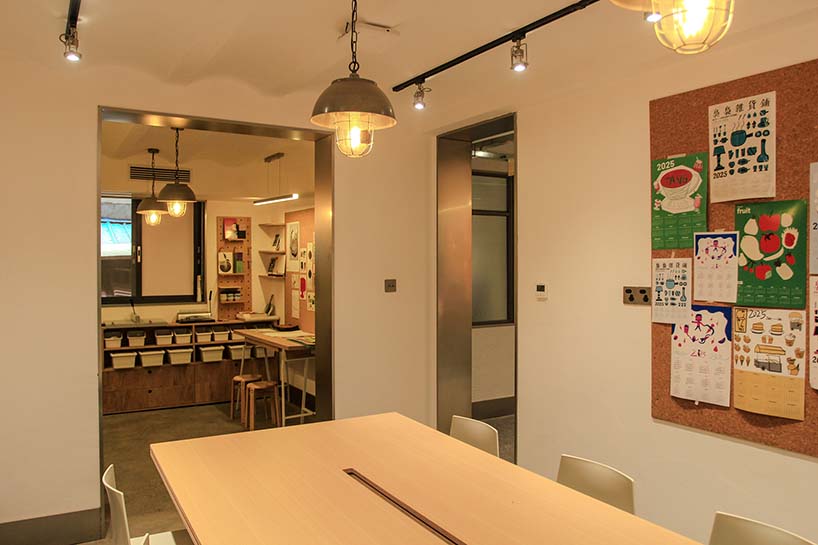
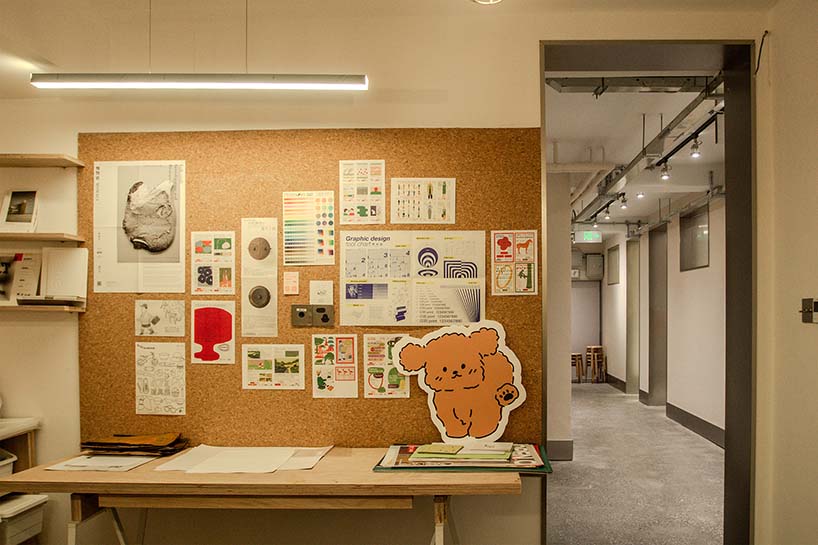
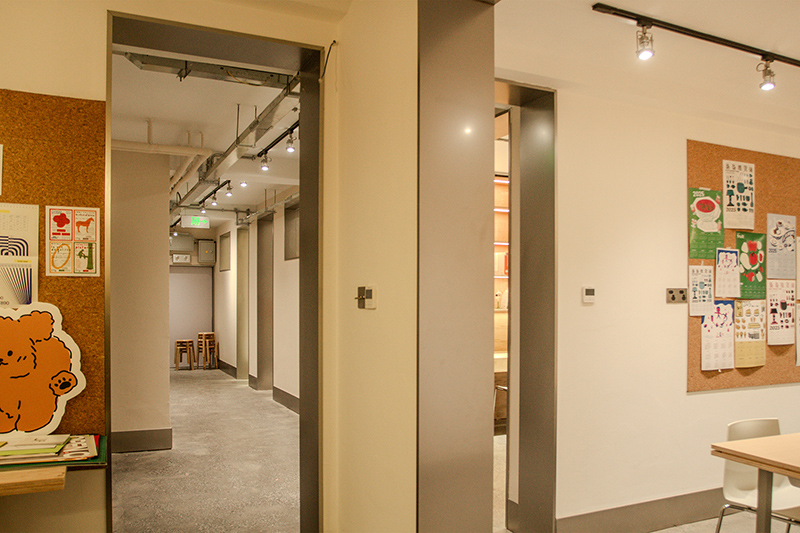
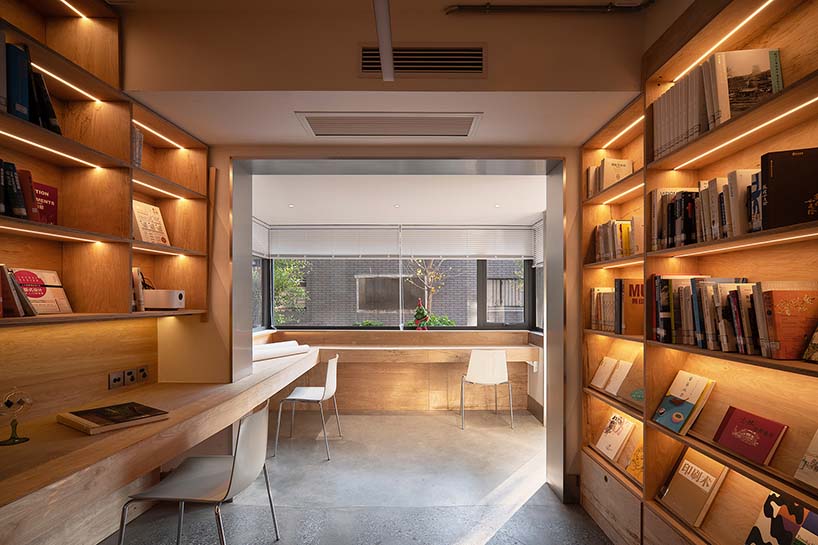
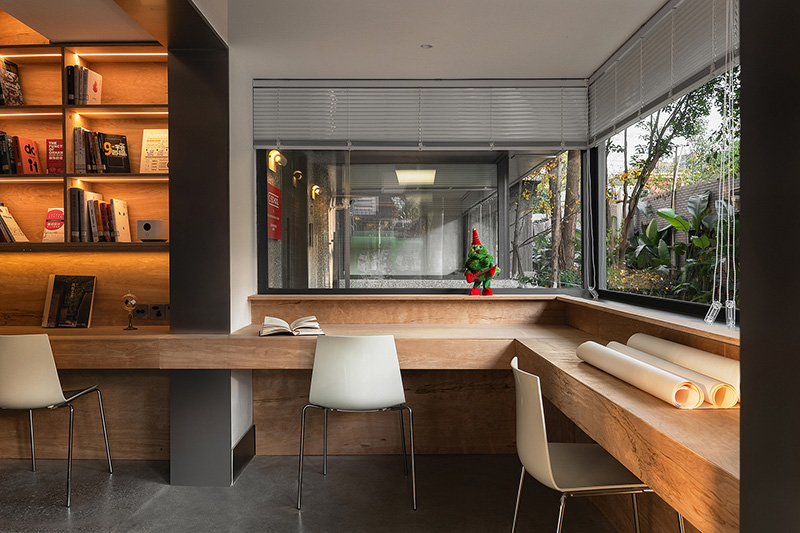
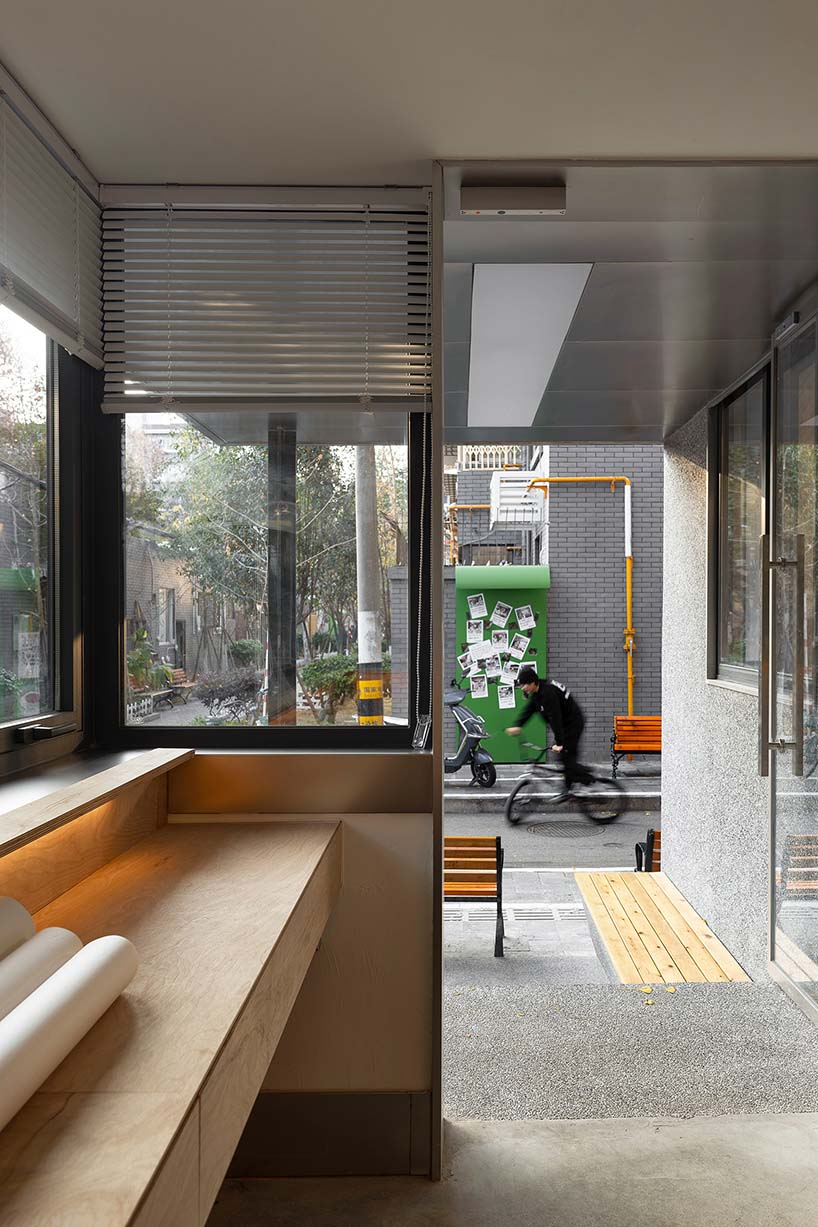
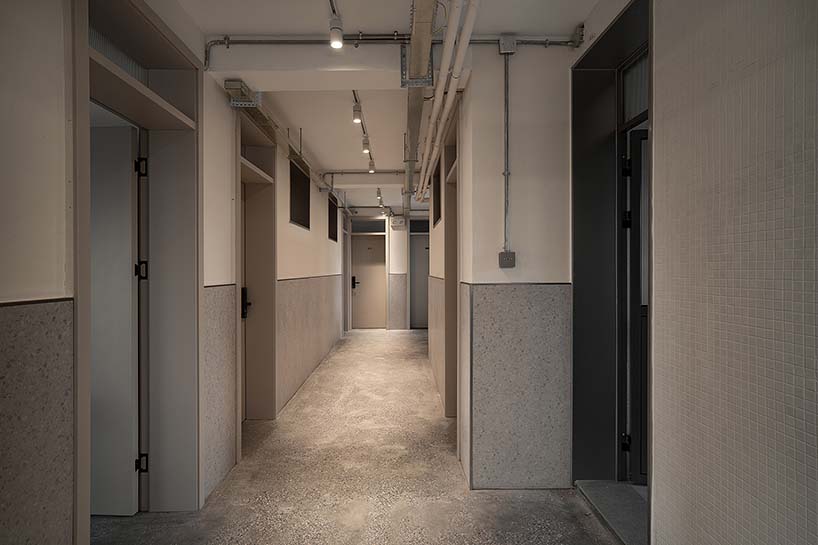
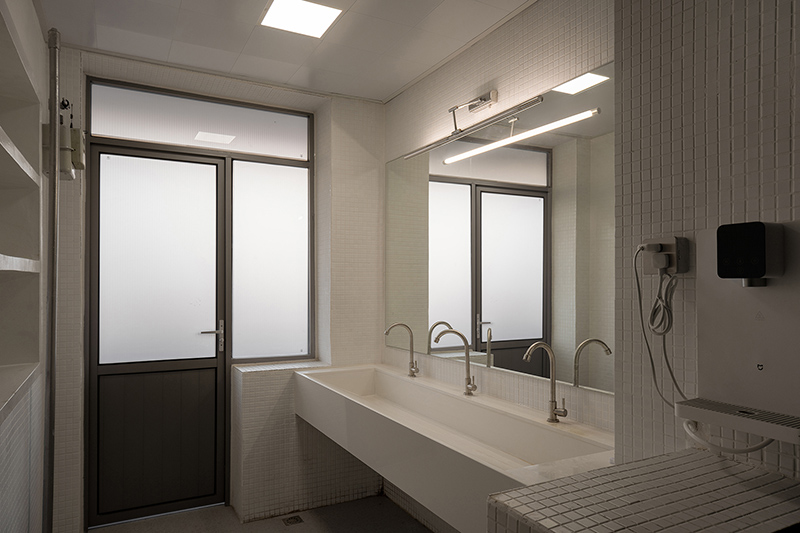
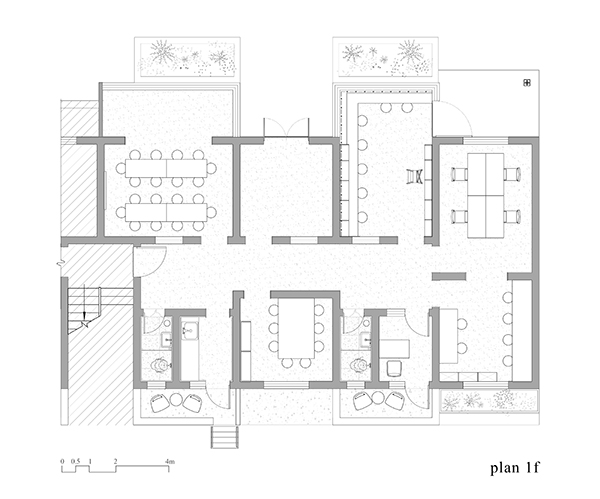
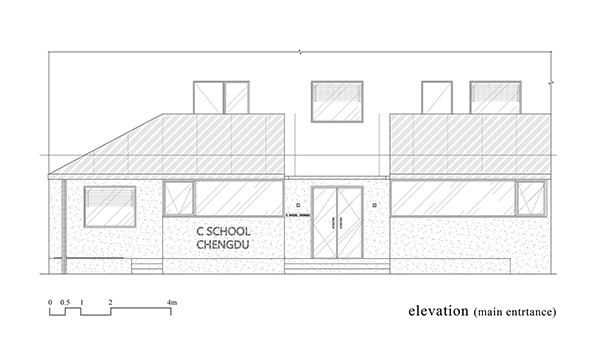
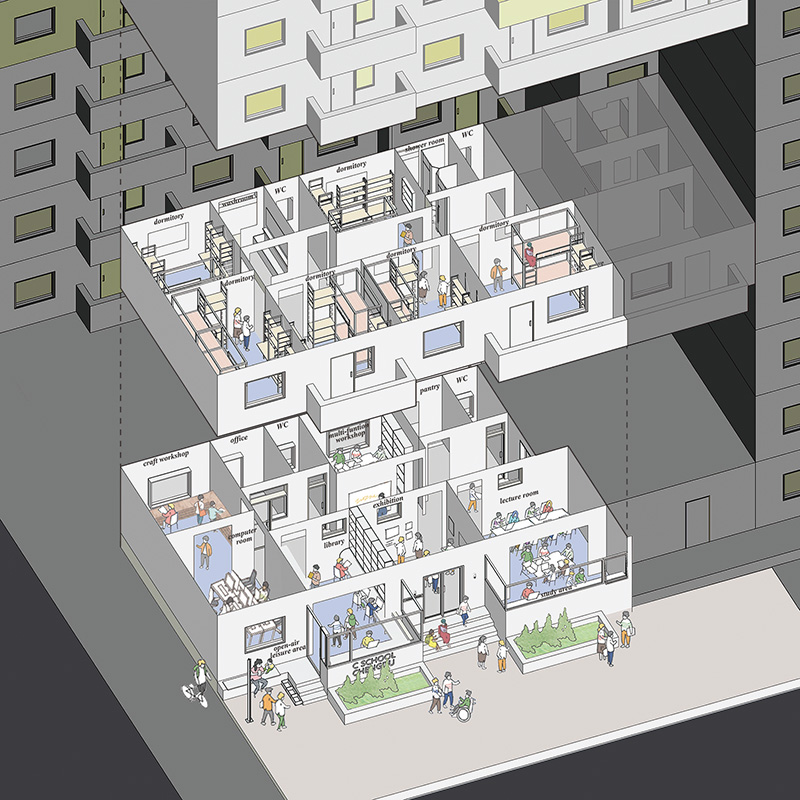
老居民楼原为厂职工宿舍,在原始格局基础上局部改扩建后,首层成为学校的公共空间,兼具教学、工坊、展览、图书室功能。除基本的固定置物架以外,桌椅家具均为模块化设计,可拼合或打散以适应多元场景。改造刻意保留了居民楼的岁月痕迹,老式水磨石地面、走廊高窗等,经打磨修缮后焕发新的生命力。而建于上世纪的昏暗公寓在阳台处被尽可能打开,扩建形成新的沿街界面,在“隐私高度”之上用玻璃引入自然光,同时保留学生靠窗坐下后专注学习的安全感。
The original building, once a factory dormitory, was partially renovated and expanded. The ground floor now serves as a school communal space for teaching, workshops, exhibitions, and a library. Except for fixed shelves, all furniture is modular and can be rearranged for various uses. The design retains traces of time—old terrazzo floors and high corridor windows were restored to bring new life. The formerly dim apartments were opened up at the balcony side, extending toward the street. Glass above eye level allows natural light while maintaining a sense of security for students studying by the windows.
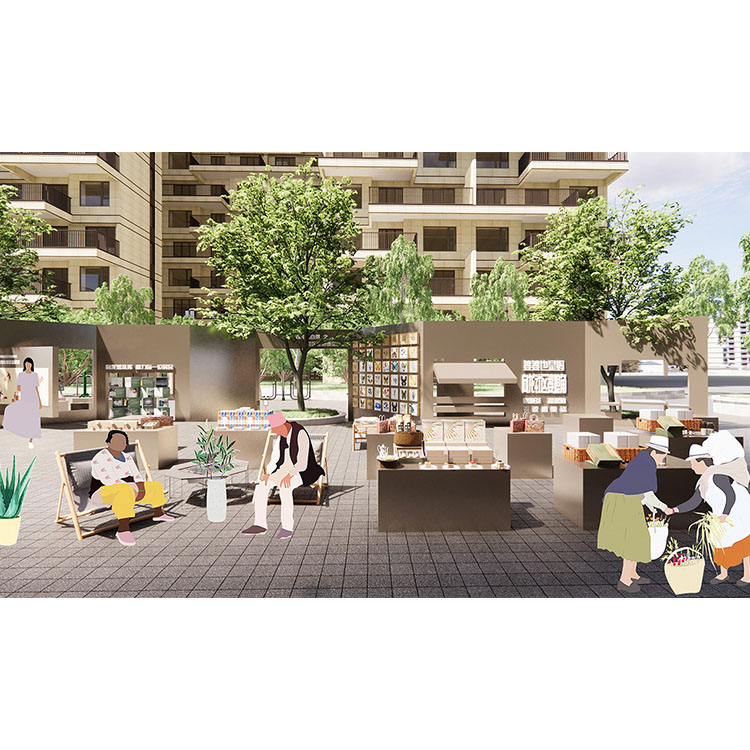
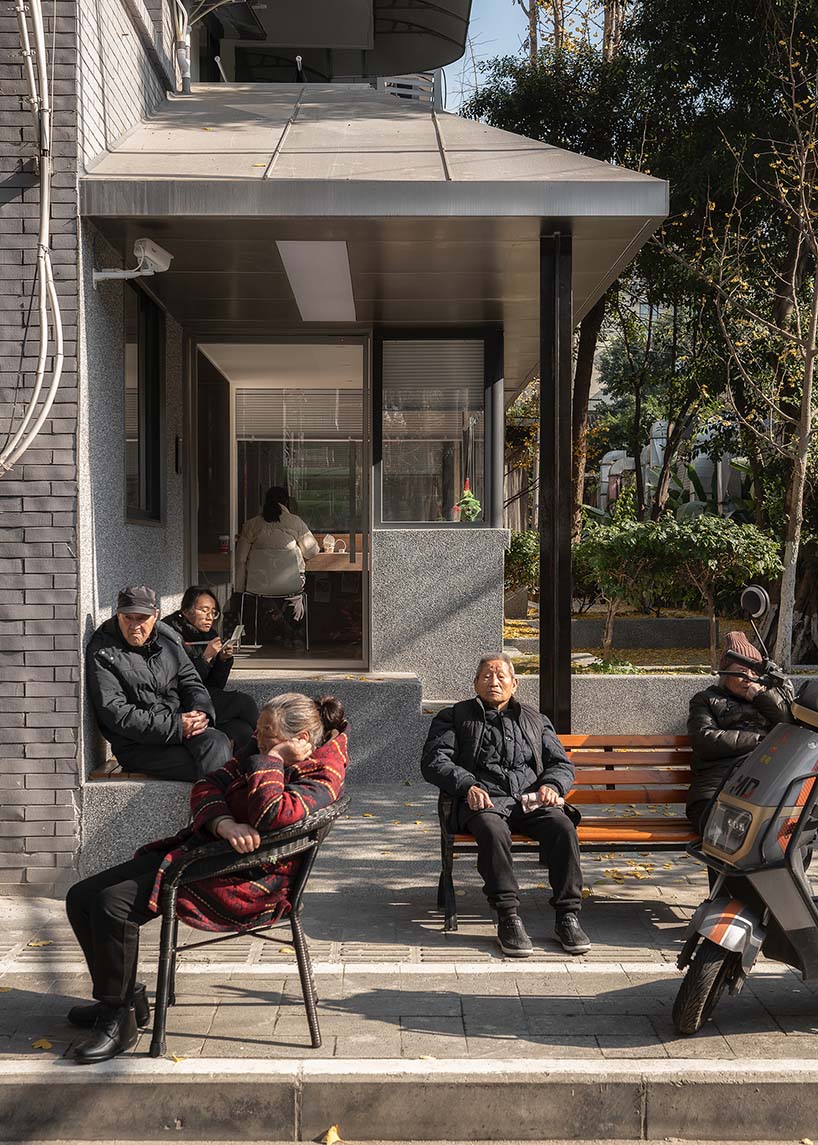
改造设计有意地模糊学校与社区的界线。沿街新增雨棚下方的空间没有被纳入室内,而是设座椅、成为社区街角的微型口袋公园。学校公共空间在教学时间向社区敞开,欢迎居民进门看书、看展或与师生交流。原有绿化带和老银杏树得到保留,树下花坛边常能看到学生闲坐聊天。
The redesign blurs the line between school and community. The area under the new street canopy, with its seating, acts as a small pocket park. During school hours, the public space is open to all—residents can read, visit exhibitions, or talk with students and teachers. The existing greenery and old gingko tree are preserved, often with students sitting and chatting beneath it.
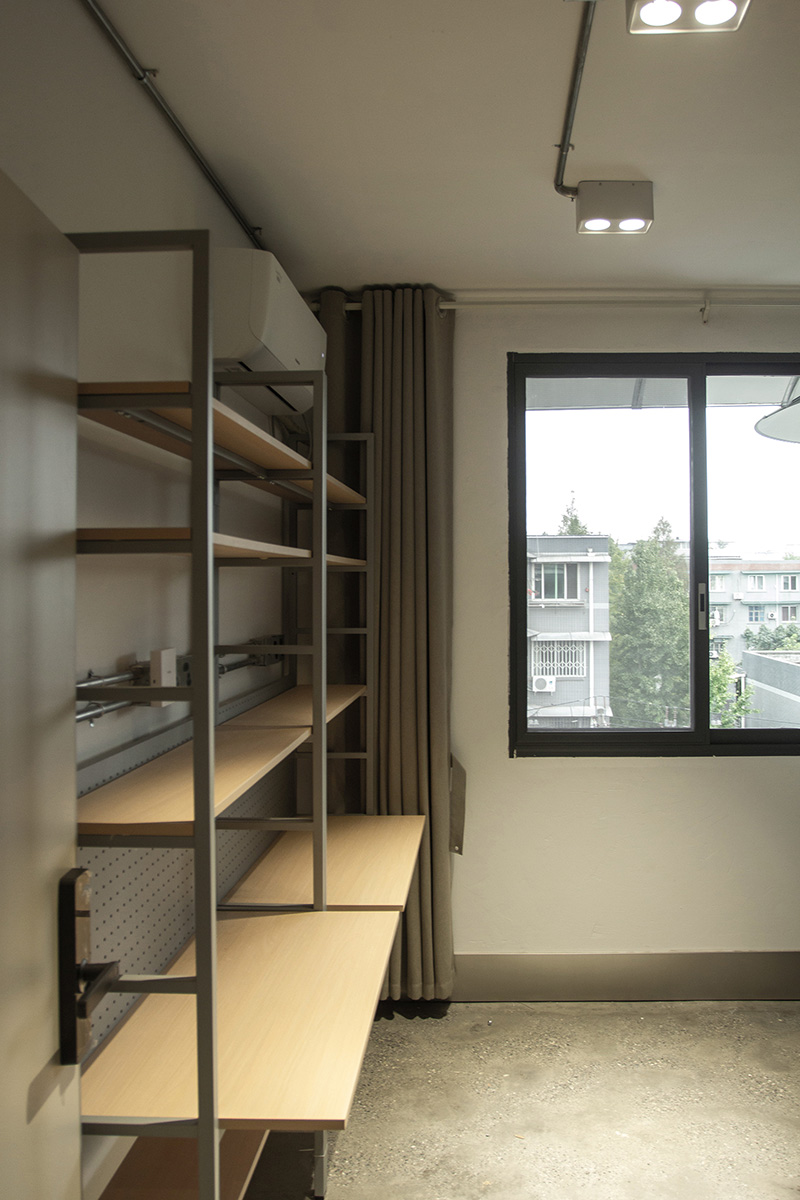
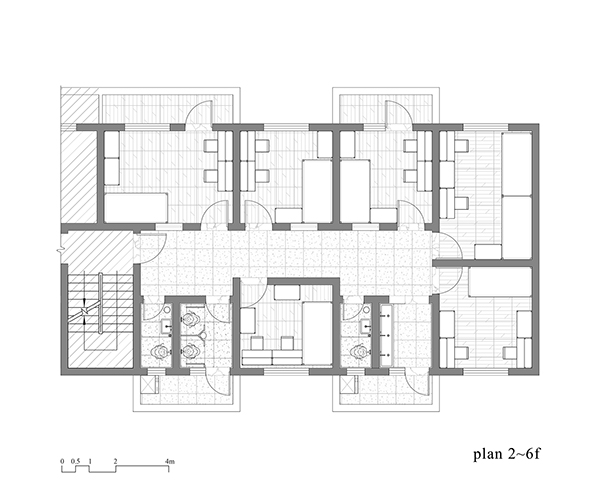
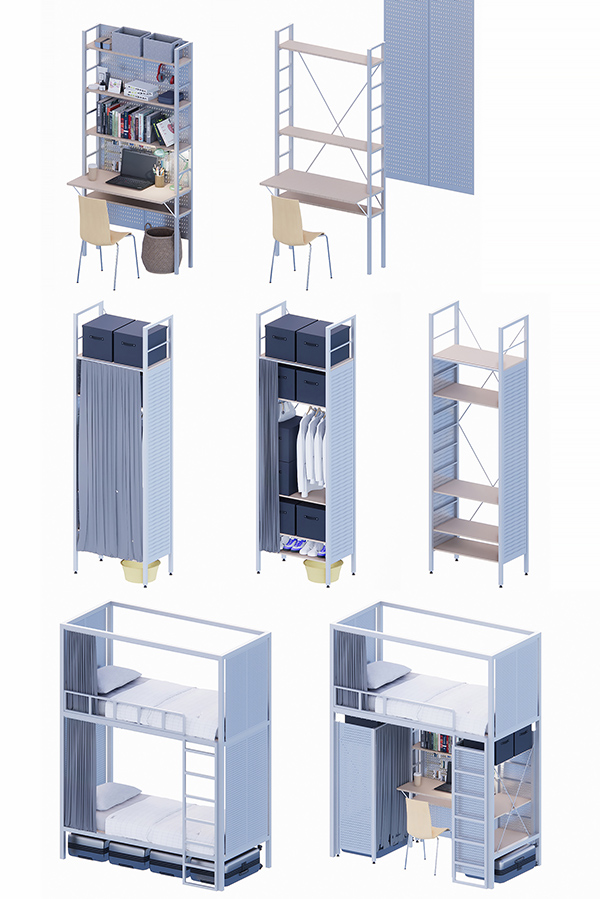
老居民楼的二至六层被改为宿舍区,根据需求设计了全套模块化家具,包括可自行调整隔层板的衣柜组合、书桌+置物架组合,带隐私隔板的上下铺,方便寒暑假期间改装为青旅或邀请艺术家短期驻地。
The second to sixth floors of the old building were converted into dormitories. They are fitted with modular furniture, including wardrobes with adjustable shelves, desk-storage units, and bunk beds with privacy panels. This flexible setup allows the space to be easily adapted into a youth hostel during holidays or to host short-term artist residencies.
当“传统校园+固定教室”的模式被解构,C-SCHOOL展现出教育空间的社会价值。不仅在于学习行为的场所,更在于其作为社区关系催化剂的潜能。
By deconstructing the traditional “traditional campus + fixed classroom” model, C-SCHOOL reveals the social value of educational space. It functions not merely as a setting for learning activities, but also as a potential catalyst for community relationships.